
-
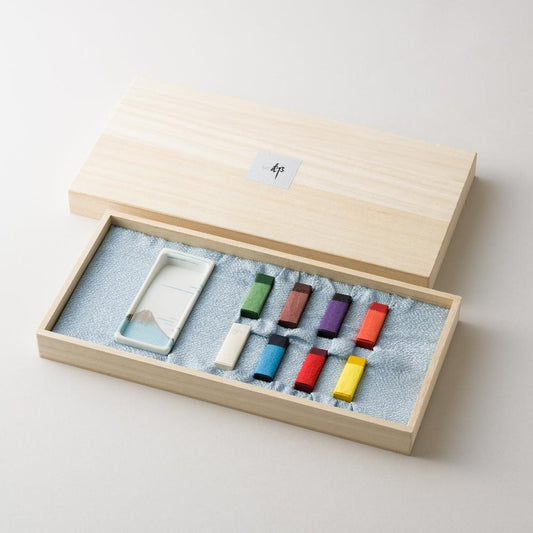
【KISHU & ARITA】 Arita Porcelain suzuri (OMOTE) - FUJISAN & 8 watercolor sumi ink sticks good for calligraphy and sumie painting
Regular price ¥34,000Regular priceUnit price per -
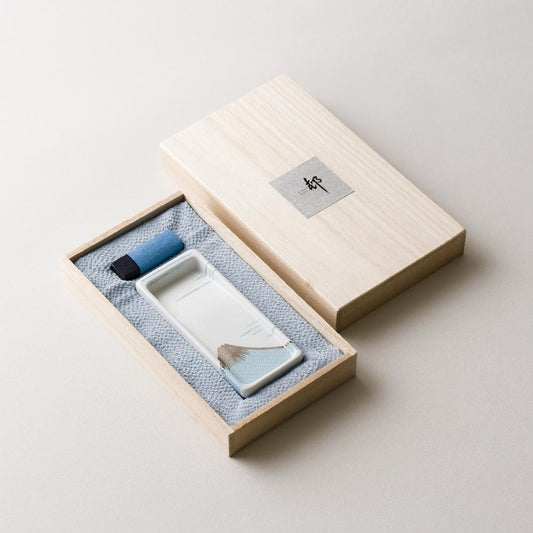
【KISHU】Arita Porcelain suzuri (OMOTE) & SAIEMBOKU, watercolor sumi ink stick
Regular price ¥12,000Regular priceUnit price per -
 Sold out
【赤間硯: 日枝玉峯堂製造】 AKAMA suzuri (oval)
Regular price ¥36,000Regular priceUnit price per -
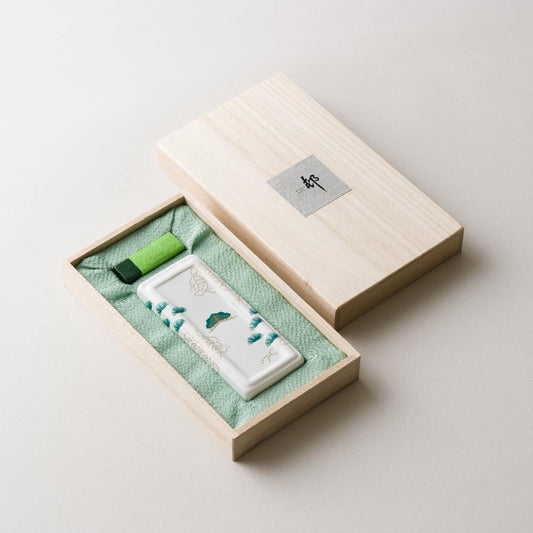
【KISHU & ARITA】Arita Porcelain suzuri (URA) & SAIEMBOKU, watercolor sumi ink stick
Regular price ¥12,000Regular priceUnit price per -
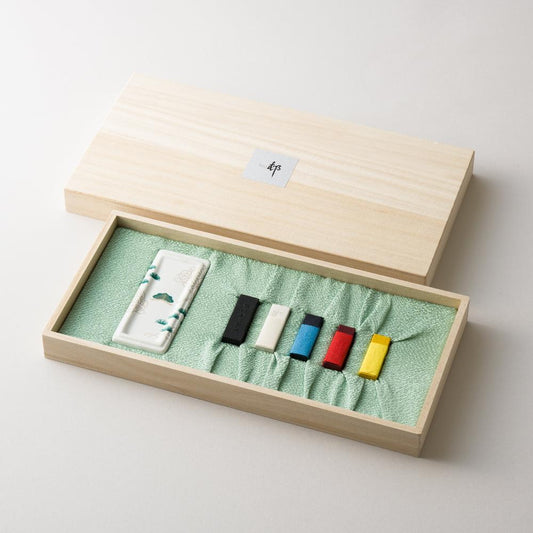
【KISHU & ARITA】Arita Porcelain suzuri (URA) comes with 1 KISHU SUMI & 4 SAIEMBOKU
Regular price ¥30,000Regular priceUnit price per -
【Ogatsu Suzuri】 by Masaru Yamazaki
Regular price ¥99,000Regular priceUnit price per -
【Tosa Suzuri】 Nakamura Suzuri by Issui Kobo
Regular price From ¥33,000Regular priceUnit price per



-

硯 akama suzuri inkstone
To know moreThe Akama suzuri is an inkstone produced in Shimonoseki and Ube.are in Yamaguchi Prefecture, Japan. An Akama suzuri dedicated to Tsurugaoka Hachimangu Shrine in Kamakura by Minamoto no Yoritomo tells that its history dates back to the Kamakura period. It is known that production of Akama suzuri began in the Kamakura period, boasting a history of over 800 years.
-

硯 Arita Porcelain suzuri
To know moreThe white inkstone makes it easy to see the shade of the ink, so you can enjoy the beauty of the gorgeous colored ink as well as the time you spend grinding the ink with a rich mind. Arita Porcelain suzuri is easy to care for. Just a little of water easily removes ink stains therefore you can keep the whiteness of the suzuri.


what's new
View all-

Kishu Shoen Highlighted in Hidetoshi Nakata’s "...
Hidetoshi Nakata's media platform "NIHONMONO," which highlights traditional culture and craftsmanship across Japan, recently featured Kishu Shoen, a sumi ink studio located in Tanabe City, Wakayama Prefecture. Kishu Shoen revived...
Kishu Shoen Highlighted in Hidetoshi Nakata’s "...
Hidetoshi Nakata's media platform "NIHONMONO," which highlights traditional culture and craftsmanship across Japan, recently featured Kishu Shoen, a sumi ink studio located in Tanabe City, Wakayama Prefecture. Kishu Shoen revived...
-

Experience rimpamura
Every traditional brush, ink stick, sheet of handmade paper, and inkstone carries the quiet work of Japanese Shokunin —craftspeople shaped by years of experience, patience, and quiet dedication. At rimpamura,...
Experience rimpamura
Every traditional brush, ink stick, sheet of handmade paper, and inkstone carries the quiet work of Japanese Shokunin —craftspeople shaped by years of experience, patience, and quiet dedication. At rimpamura,...
-

Discover the Art of Grinding Sumi Ink: A Moment...
Beyond a simple preparation for calligraphy or sumie, grinding sumi ink is a quiet ritual that restores the mind.From the gentle drop of water resting on the stone to the...
Discover the Art of Grinding Sumi Ink: A Moment...
Beyond a simple preparation for calligraphy or sumie, grinding sumi ink is a quiet ritual that restores the mind.From the gentle drop of water resting on the stone to the...
-

Kishu Sumi Recognized with Ichibanboshi Award: ...
On February 10, 2026, the Kishu Sumi (pine soot sumi ink from Kishu) produced by Mr. Horiike was selected as one of the 20 inaugural certified products for the "Wakayama...
Kishu Sumi Recognized with Ichibanboshi Award: ...
On February 10, 2026, the Kishu Sumi (pine soot sumi ink from Kishu) produced by Mr. Horiike was selected as one of the 20 inaugural certified products for the "Wakayama...


