

3 types of Maki Fude
-

general type
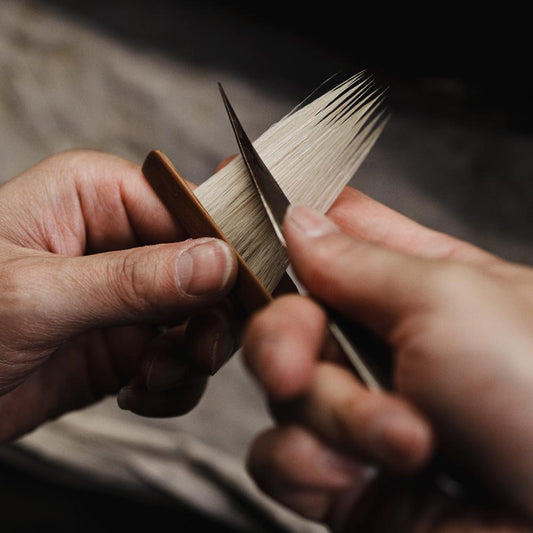
To know moreA fude made by wrapping the core hair with washi paper and then adding the outer hair. At first glance, it may not look much different from a regular fude, but upon closer inspection, you can see that the tip suddenly becomes very thin from the part where the paper is wrapped.
-

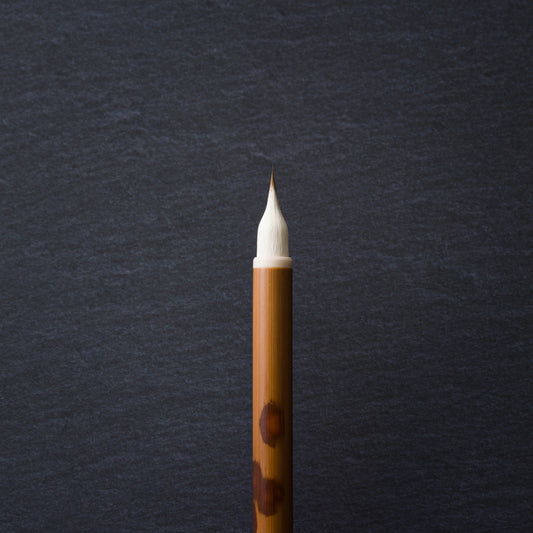
sparrow head type
to know morePair text with an image to focus on your chosen product, collection, or blog post. Add details on availability, style, or even provide a review.
-

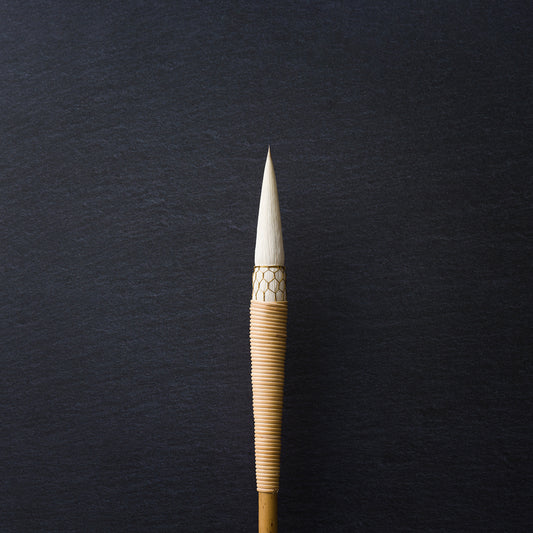
rattan-wrapped type
to know moreA large maki fude brush used for writing large Kanji characters, with the brush head and handle connected using rattan and wire mesh.


-
【HANKEIDO】Maki Fude - RYUTOMAKI FUDE in a paulownia box.
Regular price From ¥17,000Regular priceUnit price per -
【HANKEIDO】Maki Fude - Jakuto Fude (Sparrow-Head Brush)
Regular price From ¥4,300Regular priceUnit price per -
【HANKEIDO】Maki Fude - SHIBIEN
Regular price ¥5,320Regular priceUnit price per -
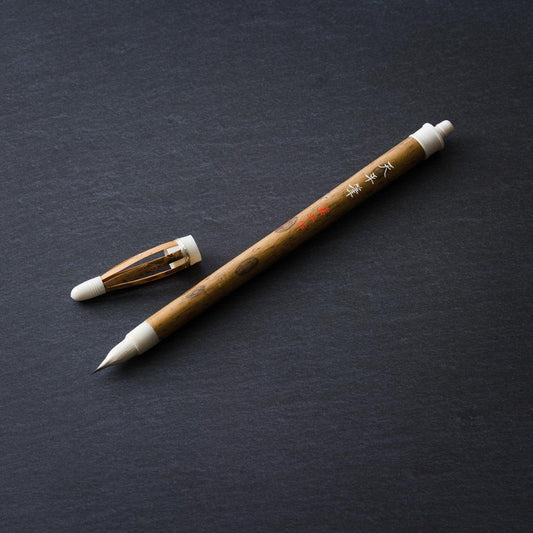
【HANKEIDO】Maki Fude - TENPYO FUDE, suitable for copying sutras
Regular price From ¥14,000Regular priceUnit price per




what's new
View all-

Kishu Sumi Recognized with Ichibanboshi Award: ...
On February 10, 2026, the Kishu Sumi (pine soot sumi ink from Kishu) produced by Mr. Horiike was selected as one of the 20 inaugural certified products for the "Wakayama...
Kishu Sumi Recognized with Ichibanboshi Award: ...
On February 10, 2026, the Kishu Sumi (pine soot sumi ink from Kishu) produced by Mr. Horiike was selected as one of the 20 inaugural certified products for the "Wakayama...
-

Special Live Session: The Secrets of Soot
On January 30th at 13:00, we will connect online directly with Mr. Horiike of Kishu Shoen, Japan's legendary ink maker. He will take us virtually into the workshop where the...
Special Live Session: The Secrets of Soot
On January 30th at 13:00, we will connect online directly with Mr. Horiike of Kishu Shoen, Japan's legendary ink maker. He will take us virtually into the workshop where the...
-

Special Invitation for International Artists: p...
Welcome to Tokyo for "Art Beyond Boundaries 2026. Inspired by the historical "Koetsu-mura"—a legendary village where artisans gathered to create new styles in 17th-century Kyoto—rimpamura aims to be a modern...
Special Invitation for International Artists: p...
Welcome to Tokyo for "Art Beyond Boundaries 2026. Inspired by the historical "Koetsu-mura"—a legendary village where artisans gathered to create new styles in 17th-century Kyoto—rimpamura aims to be a modern...
-

Maki Fude (cored brushes) vs Suihitsu (non-core...
A Makifude has Japanese paper wrapped around its core; therefore, only about one-third of the bristles on a Makifude brush are exposed for use, while the bristles of a Suihitsu...
Maki Fude (cored brushes) vs Suihitsu (non-core...
A Makifude has Japanese paper wrapped around its core; therefore, only about one-third of the bristles on a Makifude brush are exposed for use, while the bristles of a Suihitsu...


